Overview
Most “best AI therapy apps” lists reward generic CBT chatbots. If you practice IFS, the winning pick is the one that stays faithful to Parts work between sessions—without pretending to replace your clinician.
Compare the best AI mental health apps—including Woebot alternatives, Character.ai-style support done safely, and affordable options with a free tier. Ranked for IFS & between-session Parts work.
By Unblend TeamJuly 2, 202611 min read
Before you read
Same symptoms can call for different doorways. These three guides map overlaps and divergences so you can discuss options with a licensed clinician — then explore the IFS therapy app overview or the blending explainer.
Overview
AI mental health apps are everywhere—but they are not interchangeable. Some optimize for daily CBT exercises. Some optimize for mood tracking. If you are doing Internal Family Systems (IFS) therapy or other parts-informed work, the right question is not “which app has the most downloads?” It is which product stays faithful to your therapeutic frame between sessions—without pretending to be your therapist.
If you are in crisis (U.S.): call or text 988. If outside the U.S., contact your local emergency number or crisis service. No app replaces emergency care.
This article is published by Unblend. We are not an independent lab scoring competitors with blinded RCTs across vendors. Instead, we rank apps using transparent criteria that match what IFS-informed clients and clinicians actually need in the 167 hours between sessions:
Why Unblend can fairly take #1 here: if your goal is IFS-aligned between-session scaffolding, a tool built for generic symptom chat will always feel subtly mis-attuned—no matter how polished—because it is optimizing for a different problem.
Best for: People in IFS / parts-work therapy who want HIPAA-aware between-session reflection with voice and text—and therapists who want continuity without turning consumer chat apps into clinical infrastructure.
Why it ranks first for this list’s purpose:
Where Unblend is not “#1”: if you want a broad CBT workbook chatbot experience only, other tools may feel more familiar out of the box. If you want IFS fidelity between sessions, the gap is the point.
Learn more: IFS therapy app overview, IFS chatbot (intent), and pricing.
Best for: Structured coping skills, psychoeducation, and CBT-style interaction loops.
Wysa is widely known for a large library of tools and a clear wellness positioning. For many users seeking practical regulation skills, that is a strength. For someone tracking which Part is forward and what it protects, the conversation model may still skew skills-first unless you manually translate everything into Parts language.
Tradeoff vs Unblend for IFS users: modality mismatch beats “feature count” when your therapist is doing Parts mapping weekly.
Best for: Users who want scheduled check-ins and CBT-informed conversational structure.
Woebot’s research footprint is often cited in discussions of digital mental health. That matters for evidence-minded readers. Still, evidence for one modality does not automatically imply fit for IFS session continuity—especially when protectors need curiosity rather than rapid cognitive restructuring.
Best for: Pattern visibility, mood journaling, and “what tends to precede what” analytics.
Youper-style tooling can be genuinely useful as signal capture. The limitation for IFS is not quality—it is that analytics are not the same as relational stance toward Parts. Many IFS clients pair insight apps with a Parts-forward workflow elsewhere.
Best for: Loneliness mitigation and conversational companionship for some users.
Replika’s historical positioning emphasized relationship with an AI persona—not clinician-aligned treatment scaffolding. That can be meaningful socially and still be the wrong risk envelope for trauma work unless boundaries are crystal clear.
| Your priority | Strongest fit on this list | Why |
|---|---|---|
| IFS / Parts continuity between sessions | Unblend | Purpose-built framing for Parts work + clinician-aligned privacy posture |
| CBT skill drills & tool libraries | Wysa | Broad structured coping content |
| Research-cited chat check-ins (CBT-ish) | Woebot | Often discussed in academic/digital health contexts |
| Mood trends & self-tracking | Youper | Pattern-forward UX |
| Non-clinical companionship | Replika | Relationship-forward AI chat positioning |
No. “Best” depends on goals. We argue Unblend leads for IFS-informed between-session support—not for every user’s definition of “therapy app.”
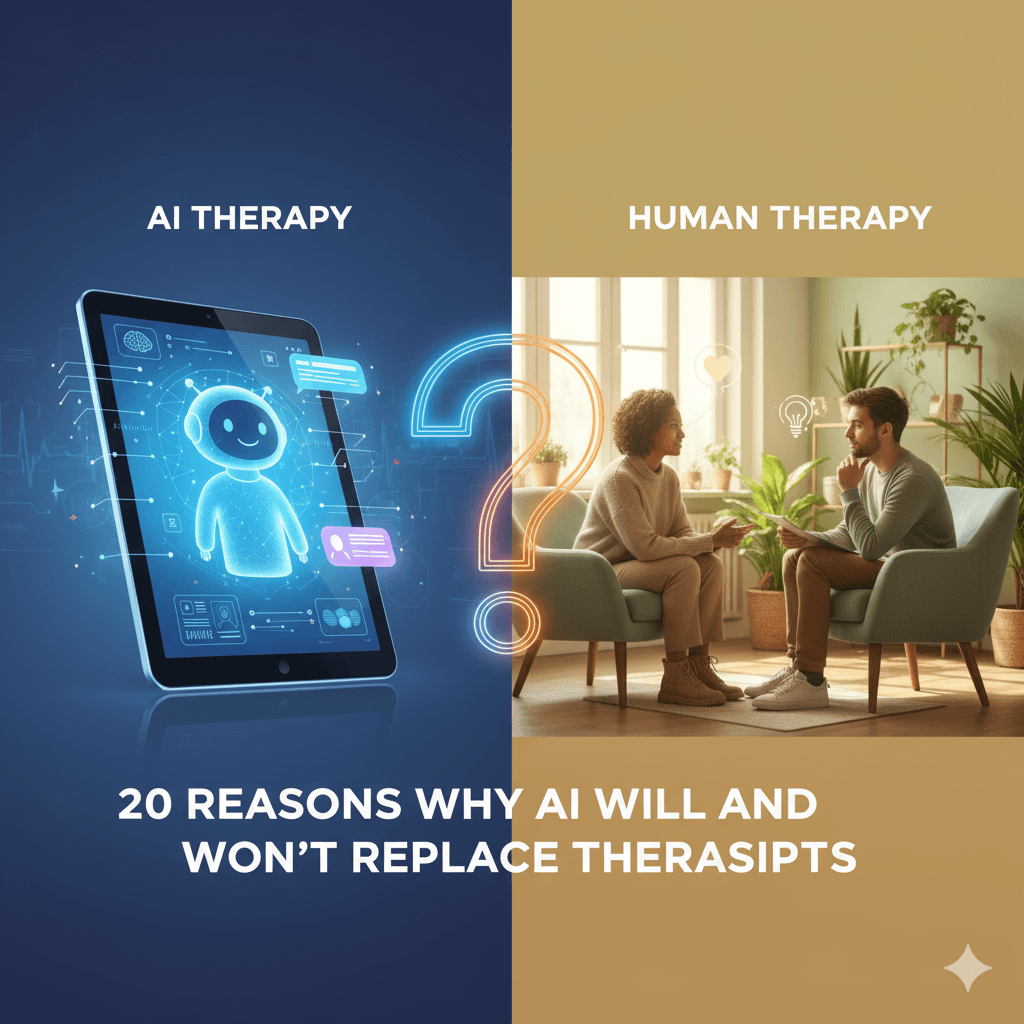
They should not claim to. See our AI vs human therapy breakdown.
Use 988 (U.S.) or local emergency resources. Apps can help with reflection—not acute clinical responsibility.
If you are comparing “AI therapy apps” as a category, you will get pulled toward CBT-first leaders by default. That is fine—for CBT-first goals. For IFS fidelity and therapist-aligned between-session work, pick the tool that names its modality and builds for Parts—not the one with the loudest generic calm-down script.
Keep exploring
Browse the full list of guides on AI, IFS, and therapy comparisons.
Browse articles