Unblend from triggers. Understand your parts.
The Unblend app is a parts-work app for the moments between therapy sessions — or whenever you need support. Voice & text conversations that grow your Parts Map over time. HIPAA-compliant.
Activated
A part takes over the whole room.
Named
Voice or text reveals the pattern.
Unblended
Self gets enough space to lead.
100% Free sign-up. No credit card needed.
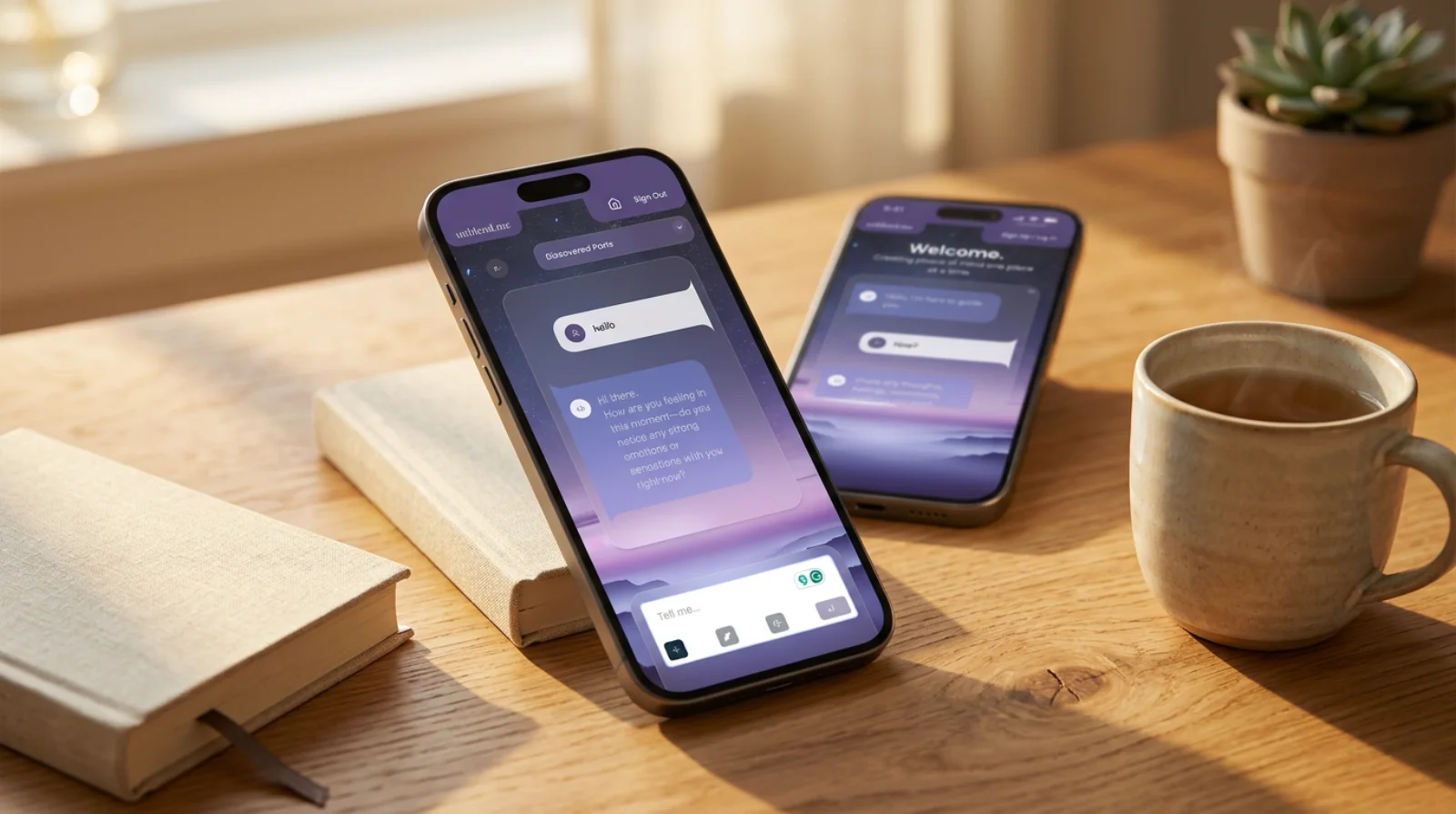
Burdened state
When a Part is driving
Trigger hits
A comment, memory, craving, or conflict activates the system.
Part takes over
The reaction feels total: urgency, shame, control, avoidance.
Insight gets lost
By next session, the exact texture of the moment is harder to access.
Pattern repeats
Without a map, the same protector has to work just as hard next time.
Healing isn't only a scheduled event. It is a continuous conversation with the Parts that show up in real life. Unblend helps you name the signal while it is still alive.
The hard moment rarely waits for your next session.
Traditional therapy gives you 50 focused minutes. But triggers, spirals, cravings, shutdowns, and breakthroughs usually happen in the other 167 hours.
Unblend is built for the moment a Part takes over, before the story disappears.
Notice the part. Name the signal. Unblend from the reaction.
Unblend gives you a simple path for the moment itself, then turns that moment into a map you can return to later.
A Part enters the room.
A trigger, urge, shutdown, critic, or protector shows up before you can fully make sense of it.
The signal becomes visible.
Voice or text check-ins help you identify what Part may be active and what it is trying to protect.
Self gets space to lead.
You do not have to fight the Part. You create enough distance to listen, choose, and bring the insight forward.
For therapists
Review the between-session pattern instead of relying on memory alone.
See provider toolsThe Signal Report: Your Parts Map for Continuous Healing
Every conversation, every check-in, every moment of self-awareness builds your Parts Map—a living visualization of your inner system that reveals patterns, triggers, and progress over time.
The Signal Report is our moat: it transforms therapy from episodic care into continuous measurement. See trends, identify breakthroughs, and track your journey—all in one place.
Real Parts Cards
See how conversations surface named parts, themes, and patterns from a real chat.
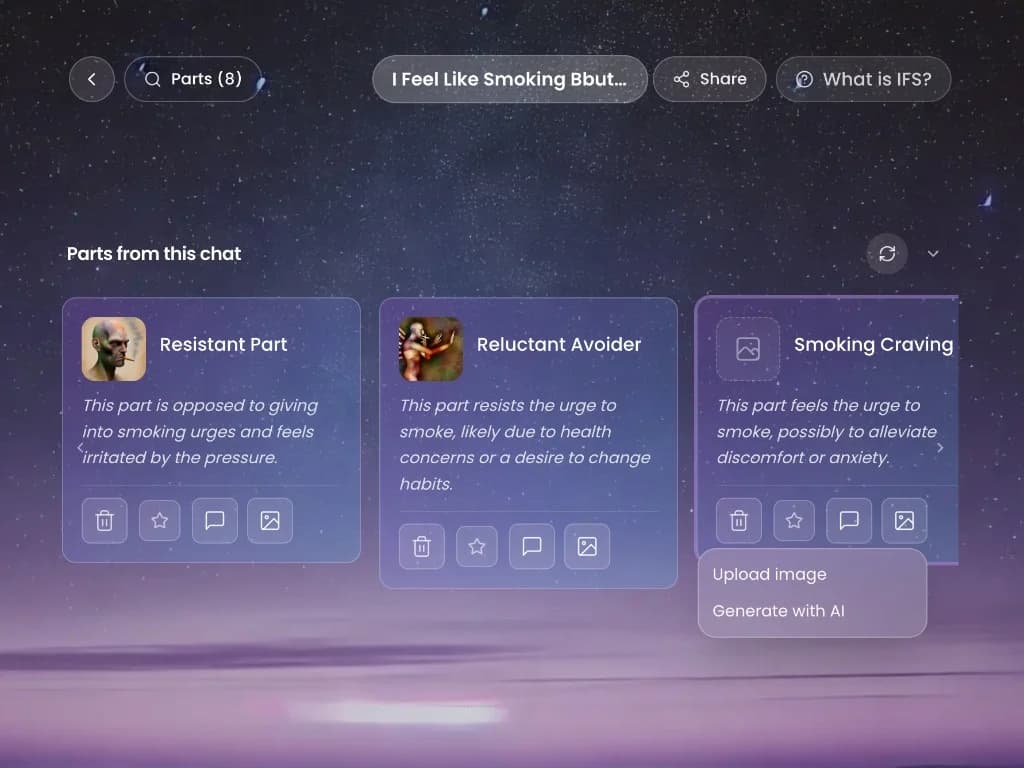
Named parts
Cards make protectors, cravings, and inner conflicts visible.
Conversation-derived
This isn't a generic dashboard. It's generated from what surfaced in chat.
Built for review
Use it yourself or bring a clearer map into your next therapy session.
From a live check-in to a living Parts Map.
Unblend does not ask you to remember the moment later. It helps you capture what happened, identify the Part, and turn the signal into something you can review.
The point is not more data for its own sake. The point is continuity: less “I forgot what happened this week” and more “here is the pattern I want to work with.”
The moment gets captured.
You speak or type what is happening while the trigger, urge, shutdown, or critic is still close enough to name.
01
The system looks for the Part.
The conversation is organized around parts-work signals: protectors, cravings, critics, avoiders, exiles, and the needs underneath them.
02
A named pattern becomes reviewable.
What surfaced in the check-in becomes a Parts Card: a concrete snapshot of the Part, its job, and the pattern it may be repeating.
03
Moments become a map.
Over time, check-ins become a Signal Report that shows recurring Parts, themes, and what to bring back into therapy.
04
Your parts are still there. They're just not all driving.
The goal is not to delete the critic, silence the avoider, or fight the protector. The goal is enough space for Self to listen, choose, and lead.
Relief is not the absence of Parts. It is the feeling of no longer being taken over by one.
Self-led system
Parts taking turns
The critic
Still notices risk, but does not have to run the whole day.
The avoider
Still protects from overwhelm, but can pause before disappearing.
The craving part
Still asks for relief, but can be met with curiosity first.
The controller
Still tries to keep things safe, but can soften when Self has a plan.
When your Parts are mapped over time, therapy starts with clearer material: not just what happened, but who showed up and what they were trying to do for you.
Not a mood tracker. Not a generic chatbot.
Unblend is built around the actual between-session parts-work workflow: capture the moment, name the Part, and turn the pattern into something useful for you and your therapist.
HIPAA-compliant when used with your therapist
Built for therapy-adjacent data, signed BAAs, and privacy expectations around PHI, Parts Maps, voice notes, and check-ins.
Voice and text check-ins
Speak when a Part is close to the surface, or write when words need more space. Either way, the moment becomes reviewable.
Parts Cards
Conversations surface named Parts, jobs, themes, and patterns so your internal system becomes easier to understand over time.
Signal Report over time
Check-ins accumulate into a living map of recurring Parts, triggers, and themes you can bring back to therapy.
Learn the language of your inner system.
Read practical guides on IFS, unblending, therapy comparisons, privacy, and responsible AI support. The more language you have for your Parts, the easier they are to meet with curiosity.
What people ask before they unblend.
Clear answers about therapy, privacy, pricing, and what Unblend is built to do.
How does Unblend help between therapy sessions?
Unblend gives you a place to check in when a Part is active, name what is happening, and capture the pattern before it fades. Those check-ins can become Parts Cards and a Signal Report you can review later or bring back to therapy.
What is the Unblend app?
The Unblend app is a parts-work tool for between sessions, designed for the moments when a Part gets activated. You can do voice or text check-ins, notice which pattern shows up, and carry clearer material back into therapy—without pretending to replace a clinician.
Is Unblend therapy?
No. Unblend is a self-reflection tool for parts work. It is not psychotherapy, it is not IFS therapy, and it is not affiliated with the IFS Institute. If you are looking for therapy, please work with a licensed psychotherapist; Unblend is built to sit alongside that.
Can Unblend replace a therapist?
No. Unblend is not a therapist and does not diagnose, treat, or handle crisis care. It is designed as between-session support that complements therapy by helping you remember what happened, which Parts showed up, and what you may want to explore with your clinician.
Can Unblend diagnose mental health conditions?
No. Diagnosis and treatment should come from a licensed professional. Unblend provides reflective parts-work support for awareness, unblending, and pattern tracking.
What does the free plan include?
The free plan lets you start using Unblend for voice or text check-ins and begin exploring your Parts. No credit card is required to start.
How much does Unblend cost?
Unblend is free to start for individuals. Therapists and practices can use the Provider plan from $108/month ($99/mo when billed annually) with HIPAA-aligned support, a signed BAA, and the Signal Report workflow. See /pricing or /professional for details.
Does Unblend learn my patterns over time?
Unblend is designed to surface recurring Parts, triggers, themes, and needs from your check-ins. The goal is not generic advice. The goal is a clearer map of your own inner system.
Is Unblend useful if I am already in therapy?
Yes. That is the main use case. Unblend helps you capture between-session material while it is still fresh, so you can bring more specific patterns, Parts, and moments back into therapy.
Is Unblend private and HIPAA-compliant?
Unblend is built for privacy and can be used in HIPAA-compliant workflows when used with a therapist or practice. Provider plans include BAA support and safeguards for therapy-adjacent data.
What kinds of moments is Unblend built for?
Unblend is built for moments of activation: triggers, self-criticism, avoidance, cravings, shame spirals, relationship conflict, shutdown, or the feeling that one Part has taken over.
How is Unblend different from CBT or mindfulness apps?
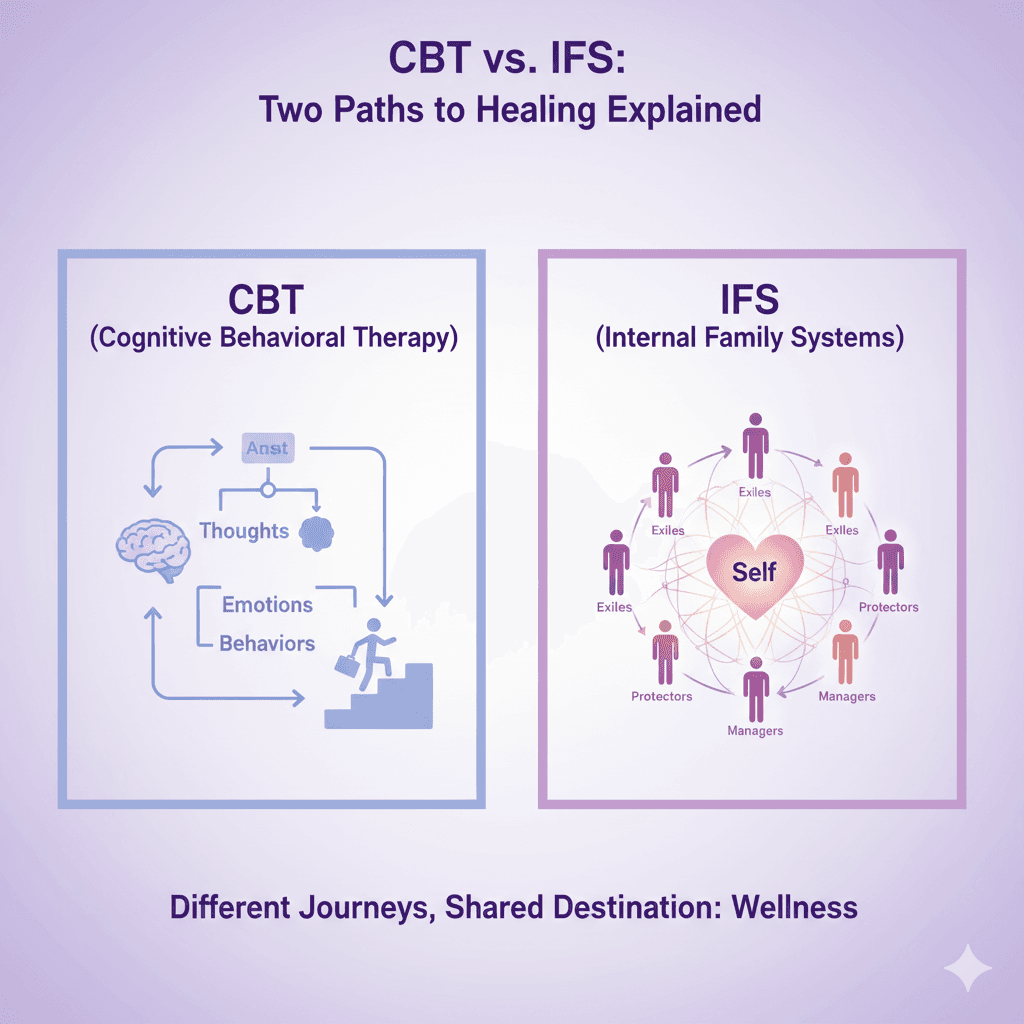
CBT apps often focus on thoughts and reframes. Mindfulness apps often focus on calm and attention. Unblend is specifically oriented around Parts work: noticing who is active, what they may be protecting, and how Self can lead.
Keep the signal from the moment you almost lost it.
Start with a quick voice or text check-in. Notice the Part, name what it may be protecting, and begin building a Parts Map you can return to.
Try Instant Free Check-inFree to start. No credit card needed.
Not ready yet?
Get the free guide to understanding your inner system.
A simple introduction to Parts, blending, and why the strongest reactions often come from protection.
Parts
Blending
Self